The problem: more content was needed, but the existing operation couldn’t deliver it
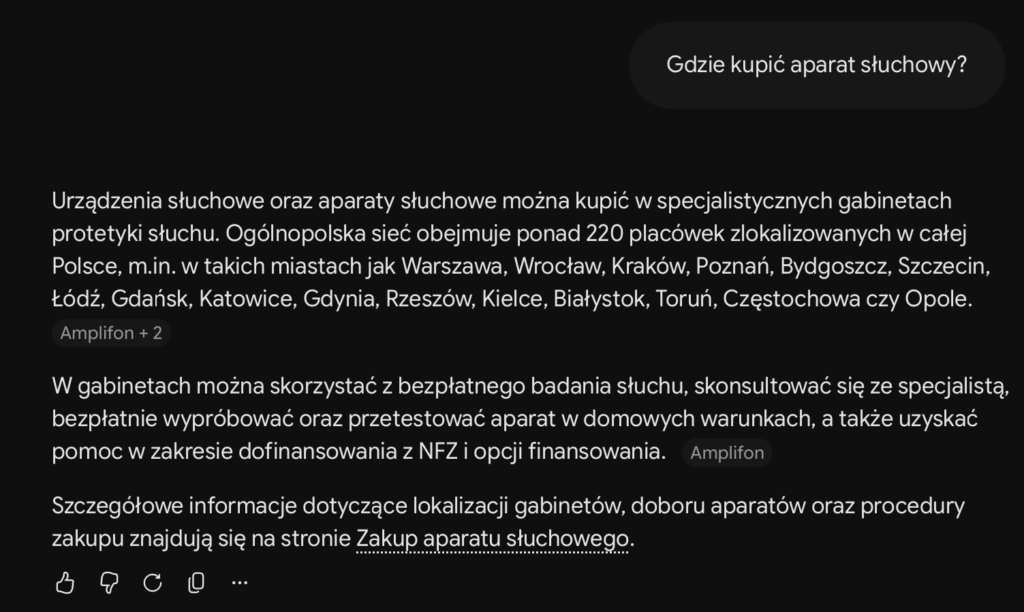
As a consultant working with the Polish branch of Amplifon, one of my responsibilities was improving organic visibility through content. This became increasingly important as Google introduced AI Overviews and changed the way people discover information. Traditional search rankings were no longer the only consideration, content also needed to be structured in a way that made it useful for AI-powered search experiences, where search engines increasingly provide direct answers rather than simply presenting a list of websites.
For a hearing aid retailer, this creates an interesting challenge. Potential customers don’t necessarily start their journey by searching for a particular brand or product, they might be looking for the symptoms of hearing loss, ways to protect their hearing, explanations of tinnitus, information about hearing aid technologies or answers to medical questions. These informational searches represent an opportunity to establish credibility and introduce the brand long before someone considers booking a consultation.
However, there were three obstacles:
- Organic traffic was under pressure. Changes in Google’s search experience meant that traditional SEO alone was no longer sufficient to maintain visibility and reach potential customers.
- Internal SEO and AEO knowledge was limited. The local team didn’t have an established methodology for researching, structuring and producing content that addressed both traditional search requirements and AI-generated answers.
- Production capacity was insufficient. The existing process delivered approximately three articles per month. Increasing that output using the same traditional approach would require additional resources, time and coordination.
There was also a rather unusual constraint on my side: I don’t speak Polish. Not a single word. I could identify search opportunities, understand the business requirements and design the content architecture, but I couldn’t write the final articles myself.
Instead of treating this as a language problem, I approached it as a process automation challenge.
The solution: a specialised AI agent instead of a generic writing assistant
I didn’t want to introduce another generic AI writing tool that would generate articles based on a short prompt and whatever information it could retrieve from the internet. In a medical and healthcare-related industry, that would be a particularly questionable approach. Instead a joke came into my mind:
“Be like an AI data center. Consume a lot of water, literature and annoy your local council.”
The agent I was developing needed to understand the subject matter, work with appropriate terminology, distinguish between different hearing conditions and technologies, and produce content that reflected the knowledge and communication requirements of a specialised hearing aid retailer.
I therefore built a dedicated knowledge base using several types of source material:
- Polish medical literature and educational publications, providing local terminology and market-specific context.
- International medical literature and professional resources covering otolaryngology, hearing disorders, hearing loss prevention, diagnosis and treatment.
- Educational materials about hearing health, common symptoms, available solutions and hearing aid technologies.
- Hearing aid retailer documentation, technical manuals and product-related materials.
- Relevant Amplifon documentation and brand-specific information.
The combination was intentional. Polish sources helped establish the appropriate local terminology and context, while international medical resources expanded the agent’s subject knowledge. Retailer documentation provided the commercial and technical perspective necessary to connect medical information with the solutions Amplifon actually offers.
The result was an AI agent with a specialised reference library rather than a generic content generator. Its job was to work within this knowledge environment and follow a defined editorial process.
The workflow: from search demand to a published Polish article
The most important design decision was separating content strategy from content production. The AI agent wasn’t responsible for deciding what Amplifon should publish. I retained control over research, prioritisation, search intent and article architecture, while delegating the actual drafting to the agent.
The process follows five distinct stages.
1. Identifying what potential customers are searching for
Everything starts with keyword research and search intent analysis. I look for questions and topics relevant to Amplifon’s business, rather than simply collecting keywords with attractive search volumes.
The research covers several content areas:
- Hearing health and prevention: how to protect hearing, what causes hearing damage and when to get a hearing check.
- Symptoms and medical conditions: hearing loss, tinnitus, ear infections and other conditions affecting hearing.
- Technology and solutions: how hearing aids work, differences between technologies and features that improve the listening experience.
- Commercial and brand-related searches: questions about Amplifon’s services, consultations, products and the process of choosing hearing aids.
The objective is to understand what users want to know, where they are in their decision-making process and how the content can address their needs.
2. Turning keyword research into an editorial blueprint
Once a topic has been selected, I build the article structure. This is arguably the most important part of the process because the quality of the final output depends heavily on the quality of the brief.
For each article, I define:
- Primary keyword and supporting keyword groups.
- Main search intent and the type of answer the user expects.
- H1 and H2 hierarchy, with clearly defined topical sections.
- Related questions and subtopics that should be covered.
- Relevant medical concepts and supporting information.
- Internal linking opportunities to existing Amplifon content and relevant service pages.
- Appropriate brand integration and calls to action.
I also consider how the article should work beyond traditional search results. Questions that users might ask AI assistants, the relationships between different concepts and the clarity of individual answers all influence the structure. This means the AI doesn’t receive a vague instruction to write about tinnitus or hearing aids. It receives a detailed content specification that defines what the article needs to accomplish.
3. Giving the AI agent the structure and relevant knowledge
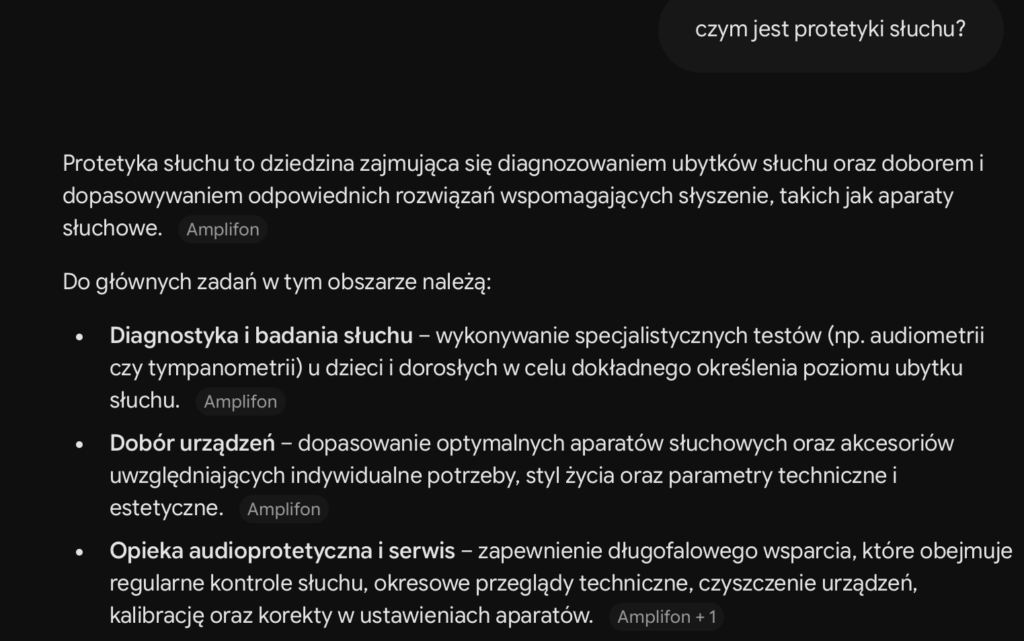
he next stage is where the specialised agent takes over. It receives the editorial blueprint and uses its knowledge base to develop the article. The agent has to follow the requested heading hierarchy, address the specified search intent, incorporate relevant supporting topics and produce content in Polish using appropriate terminology. It can draw on the medical and technical information available in its reference materials instead of relying entirely on general model knowledge.
This is also where the distinction between a generic AI writer and a specialised content workflow becomes apparent. The agent isn’t expected to invent an article from scratch. Its task is to transform researched requirements into a coherent piece of content, using a defined body of knowledge and a consistent editorial framework.
4. Reviewing the output and checking the requirements
AI-generated medical content should never be treated as automatically correct. A well-structured article can still contain inaccurate statements, misleading simplifications or claims that aren’t sufficiently supported by the available sources. The output therefore needs editorial and factual quality assurance before publication. This includes checking whether the requested structure has been followed, whether the relevant topics have been addressed, whether medical claims are adequately supported and whether the content is consistent with Amplifon’s communication and product information.
For the Polish-language review, appropriate local linguistic and subject-matter validation remains important. My lack of Polish doesn’t disappear just because an AI agent has been trained on Polish materials. The workflow makes me capable of managing the research and content architecture without speaking the language, but it doesn’t eliminate the need for language and medical quality control.
5. Publishing and feeding the results back into the strategy
Once an article has passed the necessary checks, it can move into the publishing process. Its performance then becomes part of the next research cycle. Organic visibility, search traffic, engagement and appointment bookings help determine which topics deserve further attention, where existing content needs improvement and which search opportunities remain uncovered.
This creates a repeatable process rather than a collection of isolated AI-generated articles. Each new topic follows the same strategic and production framework, making it possible to increase output without having to redesign the workflow every time.
Expanding the content strategy beyond existing medical topics
Another important part of the project was expanding the scope of the content itself. Previously, the blog primarily covered established medical topics such as hearing loss, tinnitus, ear infections, ear injuries and sudden hearing problems, and ear hygiene. These topics remained important, but keyword research revealed opportunities to address a much broader range of questions and search intentions. Based on this research, I introduced several new content areas. One focused on hearing aids and comprehensive hearing care, connecting informational content about hearing solutions with the services and products offered by Amplifon. Another focused on hearing loss prevention, covering the importance of protecting hearing, identifying risk factors and taking preventive measures before problems develop.
I also expanded the brand-related content strategy by introducing a dedicated Amplifon knowledge centre. This included content about after-sales care, essential information about Amplifon and the company’s history and development. These weren’t simply additional corporate articles. They addressed different stages of the customer journey, from understanding hearing health and available solutions to learning what happens after purchasing a hearing aid and understanding the company behind the service.
The result was a broader content architecture that went beyond individual medical conditions. Instead of limiting the blog to symptom-related searches, we started covering prevention, technology, comprehensive hearing care, customer support and brand-related questions. This gave Amplifon more opportunities to address relevant search demand and build topical coverage across the entire customer journey.
The results: from 3 to 11 articles per month
The most immediate result was the change in production capacity.
3 articles per month → 11 articles per month
That’s an increase of approximately 267% in monthly article production, or almost four times the previous output. But the objective was never to publish more articles simply for the sake of publishing more. The additional capacity allowed us to cover a wider range of relevant search topics, answer more customer questions and build a more comprehensive content presence.
We also started seeing improvements beyond production volume:
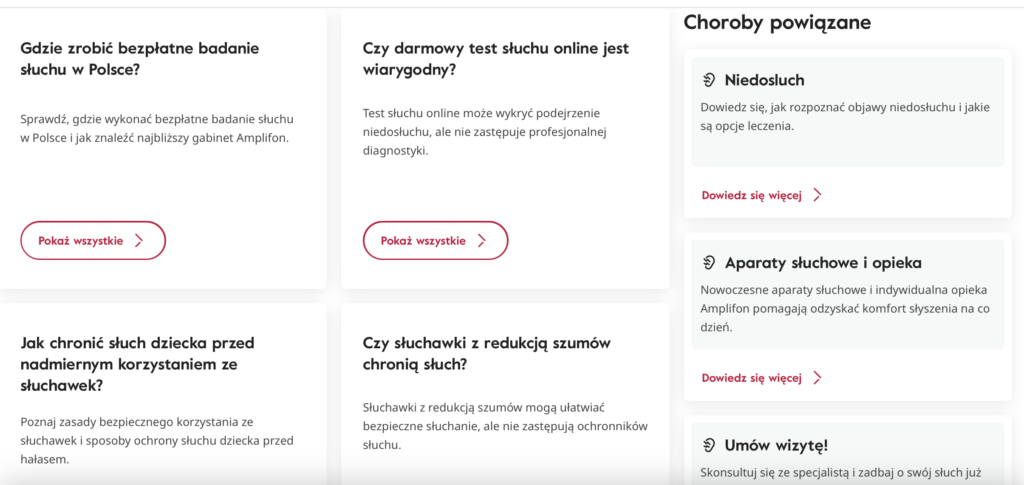
- Amplifon content began appearing in AI-powered search experiences and being recommended in AI-generated answers.
- Organic visits started growing again following the earlier decline.
- Organic appointment bookings also began recovering, reconnecting informational content with a measurable business outcome.
The important distinction is that these results came from combining several elements: better topic selection, more deliberate content architecture, specialised source material and increased production capacity. AI made the process scalable, but the strategy determined what was worth producing in the first place.
What this actually demonstrates about AI in marketing
I find this project interesting for a reason that goes beyond SEO or content production. It demonstrates how AI can help solve an operational problem that isn’t necessarily about a lack of expertise, but about the inability to turn existing expertise into deliverables at the required speed. I didn’t need to become a Polish speaker, hire an entire local editorial team or manually write eleven articles every month. I needed to understand the business, identify what potential customers were looking for, design a repeatable content process and equip an AI agent with the knowledge and instructions required to execute part of that process.
The same principle can be applied well beyond content marketing. In many organisations, valuable knowledge already exists across internal documentation, industry publications, technical manuals and experienced employees, but the problem is that accessing, organising and translating that knowledge into consistent operational output is often slow and resource-intensive. AI agents can help bridge that gap, provided they are given the right information, a clearly defined role and a process that includes human oversight.
The real achievement wasn’t getting AI to write Polish articles. It was building a content operation that could identify demand, turn research into structured editorial briefs and produce almost four times as much content without requiring me to speak the language or personally write every article.