My Story
From a fairly ordinary childhood in Hungary to entrepreneurship, corporate life, 50 countries and a few unexpected turns along the way. Not exactly the route I had planned, but hey, I never really had a plan.
Early years
Where it all started
I was born in 1994 in Szekesfehervar, Hungary, into what you’d probably call an average lower-middle-class family. Two parents, one sister, a dog and a fairly ordinary childhood. Nothing particularly dramatic, no extraordinary family legacy or story about overcoming impossible odds.

I was a restless kid. I liked building things, taking things apart, figuring out how they worked and generally keeping myself occupied. Sitting still was never my strongest quality. Curiosity came naturally, although I wouldn’t have known what to call it back then.
One of my earliest memories of wanting something bigger came from a world map I received as a child. I remember looking at all those countries, borders and names, imagining what might be out there. I had absolutely no idea what the world actually looked like beyond my immediate surroundings, but the idea of exploring it had already taken root.
Travel wasn’t a particularly big part of my childhood, since my family couldn’t really afford extensive holidays, so our trips were relatively modest, a few holidays around Hungary and occasional bus trips to Spain or Greece.
Education, expectations and a little rebellion
My school years were spent in a Catholic secondary school, which gave me structure and discipline, but also introduced me to the less appealing side of institutional thinking. I wasn’t particularly comfortable with environments where unquestioned traditions, rigid expectations and religious doctrine sometimes seemed more important than independent thought.
I learned quite early that I preferred asking questions to simply accepting answers.
When it came to university, I chose history. Not exactly the most commercially promising degree, I’ll admit. I was genuinely interested in how societies evolve, how cultures differ and what drives the events that shape our world. I also studied communication and media, which introduced me to marketing and the intersection of business, psychology and creativity.
I started working at sixteen, initially taking on administrative jobs and whatever other work I could find. During university, I also took call-centre jobs to support myself financially. Those experiences taught me how to communicate with strangers, sell, handle rejection and understand what people actually want rather than what they say they want.
Outside the classroom, university was about everything else: friendships, relationships, parties, spontaneous adventures and some questionable decisions. There were plenty of experiences that probably sound better in retrospect than they felt the following morning. I didn’t have a carefully designed career plan, so I was experimenting, making mistakes, working alongside my studies and trying to figure out what I actually wanted from life.
Looking back, those years were less about finding myself and more about discovering what I was capable of.
Rookie years
Learning the ropes
My professional life started taking shape while I was still at university. In 2015, I joined Libri-Bookline, one of Hungary’s established book retail and publishing businesses, initially as a trainee. Over the following years, I moved through assistant and coordinator positions, gradually getting involved in marketing operations, campaigns and e-commerce. This was where I built my foundations in marketing, I learned how promotions, online campaigns, content and sales activities come together in a real business environment.
More importantly, I started understanding that marketing isn’t simply about making something look good or getting people to click. It has to make commercial sense. I was learning by doing, taking on responsibilities and gradually discovering that I was more interested in the bigger picture than any individual task.
By 2017, I was ready to explore what I could build outside a traditional employment structure.
Entrepreneur years
Building something of my own
My independent work started in 2017, initially alongside my corporate career. What began as some freelance marketing projects gradually developed into a substantial independent business. Suddenly the work became increasingly broad. Beyond marketing, I got involved in business development, digital transformation, website architecture, customer journeys, CRM systems, analytics, technology and operational processes.
Over the years, I’ve worked on projects ranging from industrial businesses and pharmaceutical companies to healthcare providers and e-commerce retailers.
Some notable examples include:
- Helping a major Hungarian industrial business rethink its brand positioning and digital infrastructure, contributing to 23% year-on-year sales growth.
- Acting as an external director of operations for an aesthetic clinic in the Emirates, coordinating business strategy, marketing, IT and hiring to create a 8 person team which was able to move low ticket vs. high ticket appointment share from 87%-13% to 62%-38% in 2 years.
- As a consultant working for a major nutrition supplement retailer, I was able to deliver end-to-end improvements across UX/UI, checkout flow, IT security, internal IT structure, and delivery processes, cut average project delivery time by 42%, significantly reduced IT backlog, and drove +34% year-over-year sales growth.
I’ve also worked extensively in private healthcare and pharmaceutical marketing operations, SEO, performance marketing, sales infrastructure and, more recently, AI-powered search visibility projects.
Different industries, different teams and different problems. But there was a recurring pattern. I was most useful when a business needed someone to understand the bigger picture, connect seemingly unrelated pieces and turn a complicated situation into something actionable.
Learning to lead independently
Entrepreneurship gave me a different kind of responsibility, since there was no organisational safety net I could rely on, no department to pass a problem to and no established process for every situation. If something needed to happen, someone had to take responsibility for making it happen and most of the time I was the actual safety net for these organizations.
This was also where I gained most of my hands-on leadership experience. Across different projects, I’ve built and coordinated multidisciplinary teams covering strategy, performance marketing, SEO, creative, UX/UI, analytics, CRM, sales and technology. I’ve managed teams ranging from three to ten people, with more than 40 professionals involved across six major initiatives.
I’ve also directly mentored 16 people, 11 of whom progressed into higher-responsibility or leadership roles. That last part is particularly important to me, because results matter, but so does what happens to the people you work with along the way. Helping someone become better at what they do is one of the more rewarding parts of professional life.
Independent work also taught me that being good at your profession and running a business are two very different things. Negotiating contracts, managing expectations, finding opportunities, dealing with uncertainty and keeping projects profitable are skills you don’t necessarily learn from a job description. I made mistakes, learned the hard way and gradually developed my own approach to working with businesses.
Amplifon years
My first major international experience
In 2019, I joined Amplifon Global as Digital marketing specialist, taking responsibility for Hungary. This role later evolved into a Digital marketing manager role, being responsible for Hungary and Poland in the region.
It was a significant step up. I went from supporting marketing activities to owning digital operations across two markets, working with agencies and connecting digital acquisition with actual sales. The hearing healthcare industry was an interesting introduction to a more complex business environment. Marketing a product that directly affects people’s everyday lives requires a different level of responsibility. I had to understand the customer journey, the sales process, the people involved and the realities of the market.
Over four years, I helped drive Amplifon’s digital transformation across both markets, working across performance marketing, SEO, CRM, websites, content and lead generation. The results followed: digital-driven hearing aid sales increased by 56% over four years, with digital marketing investments generating more than 12x ROAS.
But the experience gave me more than numbers, I learned how international organisations operate, how to work with stakeholders across different markets and how to translate business objectives into practical execution. I also discovered that I was increasingly interested in the machinery behind marketing: the processes, systems, technology and organisational decisions that determine whether a strategy actually works.
The solo travel years
Something else happened during these years that would change my life considerably.
My solo travelling journey started in 2021, following a breakup. I found myself at a point where the life I had become accustomed to was changing, and I needed something different. Rather than immediately trying to replace what I had lost, I decided to go somewhere unfamiliar. Somewhere outside my routines, somewhere I couldn’t rely on the usual people and surroundings.
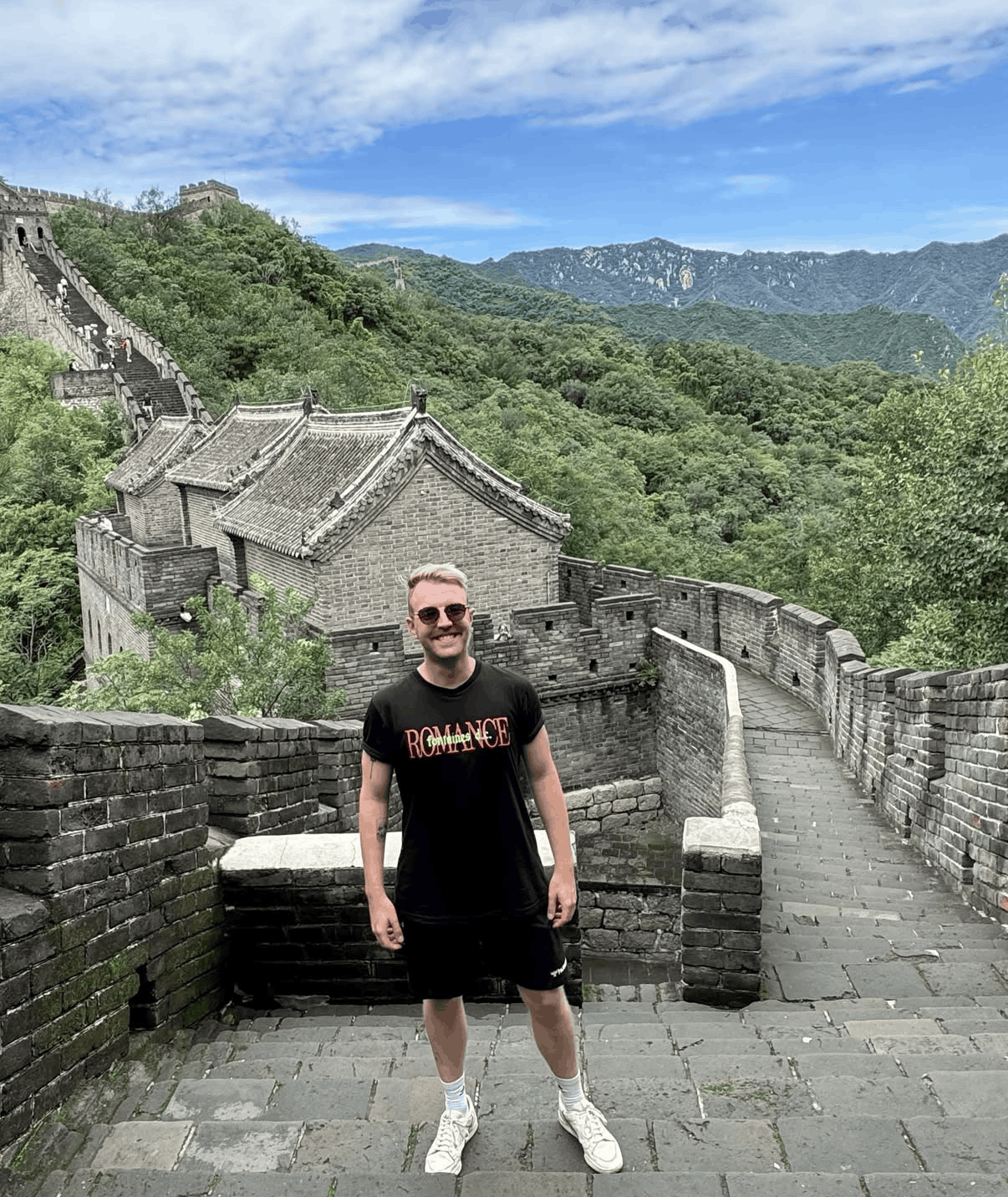
I started travelling alone. What initially began as a way of getting some distance from a difficult period gradually became one of the most defining experiences of my life. In the summer of 2021 I’ve backpacked all over Europe, hitchhiking in Ireland, partying in Berlin, chilling in Portugal and so on.
Travelling alone forced me to become more independent, resourceful and comfortable with uncertainty. There was nobody to rely on when something went wrong, nobody to make decisions for me and no familiar environment to fall back on. I had to figure things out myself, adapt quickly and become comfortable being uncomfortable.
It wasn’t always pleasant, but it made me considerably stronger. I learned to trust my own judgement, handle unfamiliar situations and stop depending so much on external circumstances to feel secure. Based on this, I can confirm that the most important part wasn’t necessarily the destinations, it was the people I met, the relationships I built, the friendships I made and the experiences that would never have happened if I’d stayed within my familiar surroundings.
Almost 50 countries and counting
Since 2021, I’ve visited almost 50 countries, covering nearly every continent except Oceania. I’ve experienced everything from familiar European cities to remote Latin-American landscapes, chaotic Asian megacities, unfamiliar cultures and places that look nothing like the world I grew up in. I’m not particularly interested in collecting passport stamps or ticking off famous landmarks, although as I write this I’m still trying to see for example the 7 wonders of our world. I prefer getting a feel for a place, understanding how people live, experiencing unfamiliar cultures and occasionally finding myself somewhere I hadn’t planned to be.
Travelling alone has a way of making you resourceful. You learn to navigate unfamiliar environments, communicate without sharing a language, make decisions with limited information and deal with situations that don’t come with an instruction manual. Some experiences are wonderful, others are considerably less comfortable. I’ve talked my way out of a gunpoint situation in Lebanon and in Myanmar, for example, which wasn’t exactly the kind of glamorous cultural exchange I had in my mind.
Travelling also made me question assumptions I’d previously taken for granted. Different societies have different priorities, social norms and ways of approaching everyday problems. Experiencing those differences firsthand made me more open-minded and considerably less convinced that my own perspective was necessarily the right one.
MSD years
A different side of the pharmaceutical industry
In 2023, I moved to MSD (Merck), joining the Vaccines Business Unit as Omnichannel Engagement Manager.
This was a different kind of challenge. I was no longer looking at digital marketing as an isolated function. My responsibilities extended across omnichannel operations, commercial execution, stakeholder management and the alignment of local business priorities with global strategies. I worked closely with a cross-functional group of 12 business unit members and global stakeholders. One of our most meaningful projects involved Gardasil 9, where our work contributed to year-on-year sales growth of 5% during these years.
During my first year we transformed an HPV awareness website into a conversion-focused platform, introducing a vaccination booking funnel that turned health awareness into action. I also focused heavily on operational improvements. We redesigned digital processes and compliance workflows, reducing medical, legal and regulatory approval times by 40%.
What corporate life taught me
Working in large international organisations gave me a much better understanding of how complex businesses operate. I learned to navigate different management styles, align people with competing priorities, communicate across cultures and get things done in environments where decisions rarely depend on one person. I also learned to distinguish between organisational activity and actual progress. Meetings, presentations, reporting structures and approval processes all have their place, but none of them automatically creates value.
I enjoyed the scale, complexity and opportunity to work with talented people. At the same time, I increasingly felt drawn towards environments where I could have more direct influence over decisions and outcomes. Corporate life gave me a lot, but it also made me realise that I didn’t necessarily want to spend my peak years at the end of my 20s and early 30s playing the corporate game.
By the end of 2024, I was ready for another change.
Digital nomad years
Trading the office for the world
Late 2024, I decided to take a different direction. During the summer of 2024 I experienced another hard-ending relationship and started to show major symptoms of burnout. Not necessarily from work, more like because of the repeating and neverending daily routines, and after years of corporate employment, entrepreneurship and independent projects, I wanted more control over how I spent my time. I’d already spent several years travelling, but I was increasingly interested in something beyond visiting countries for a few weeks.
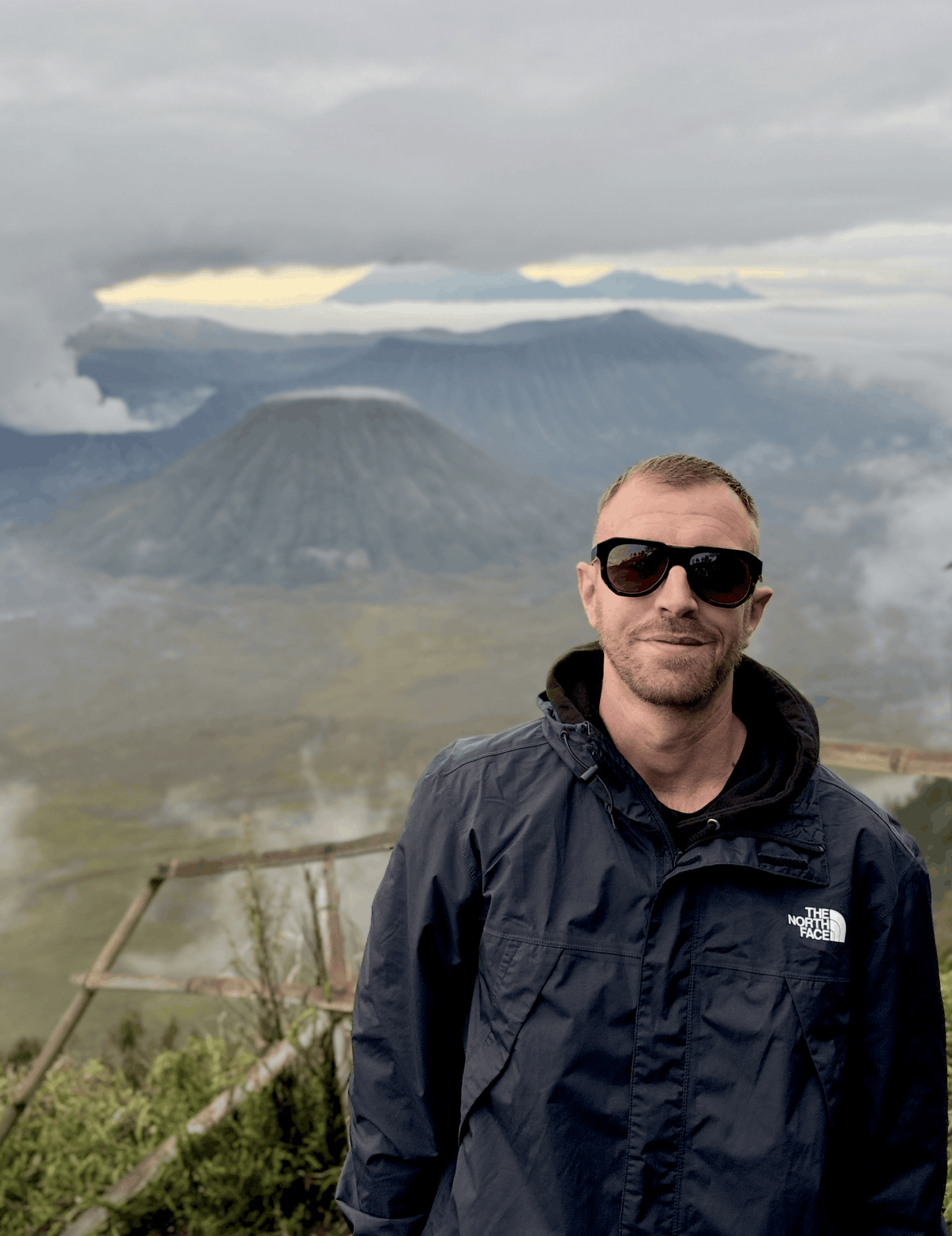
I wanted to experience what it was like to actually live somewhere else. So I embraced the so-called “digital nomad” lifestyle, spending extended periods in Asia and Latin America while continuing to work remotely. It wasn’t all picturesque cafés, tropical beaches and laptops overlooking the ocean. Working remotely from another country comes with its own complications: time zones, logistics, unfamiliar infrastructure and the occasional realisation that the Wifi situation is considerably less romantic than the Instagram photos suggest.
But it also gave me a different perspective on what a life and career could look like. I realised that I didn’t necessarily need to organise my entire life around one city, one office or one particular version of professional success. I could work, build relationships, explore new places and create a lifestyle that suited me better during my early 30s.
Learning beyond familiar surroundings
In many ways, these years have taught me more about life than any of the previous chapters. Travelling is one thing, actually living somewhere else is another. You have to build routines, maintain relationships, work, solve everyday problems and find your place in an environment where almost everything is unfamiliar.
The more time I spend outside my usual surroundings, the more I realise how much of what we consider normal is simply a product of where we happen to grow up. Living abroad has made me more adaptable, patient and open to different perspectives. It has also given me the opportunity to step away from the expectations that tend to define how we see ourselves. I’ve had to reconsider what success means to me, what kind of relationships I want to build and how much of my identity was previously tied to work, professional achievements and familiar environments.
I’ve also learned that freedom and happiness aren’t necessarily the same thing. Having the ability to move anywhere is great, but constantly moving doesn’t automatically mean you’re building the life you want. There is a difference between being able to go somewhere and having somewhere you genuinely want to stay.
Where I am today
A different kind of ambition
After the last 2 years of moving between countries, industries, businesses and lifestyles, I’ve reached a point where my priorities are changing. I’ve spent a considerable part of my adult life exploring what’s out there. I’ve built businesses, worked in multinational organisations, travelled to almost 50 countries, lived abroad and experienced lifestyles I probably wouldn’t have imagined growing up.
I’ve learned a lot about business, people and the world, but perhaps even more about myself. I’ve figured out what I’m good at, what I enjoy, what matters to me and, just as importantly, what doesn’t. For a long time, freedom meant having the ability to leave, move somewhere new and start again. I still value that freedom, but I’m increasingly interested in a different kind of stability, I want to build something more permanent.
What comes next
Professionally, I’m open to returning to a corporate environment. I’d like to bring together everything I’ve accumulated across entrepreneurship, digital marketing, commercial operations and business development, and apply that experience in a meaningful environment. I’m not particularly interested in chasing another fancy title or climbing a corporate ladder for the sake of it. I’d rather work with talented people, solve interesting problems, contribute to something bigger and have a professional environment where experience and independent thinking actually matter.
Personally, my ambitions are changing, too. I’d like to establish a home, build a family and finally settle down after years of living out of a suitcase and calling different places home. I will never regret the unconventional route I’ve taken, actually quite the opposite. Every job, business, relationship, country and unexpected detour has contributed something to the person I am today.
But I also don’t feel the need anymore to keep proving that I can start over somewhere else. I’ve had my share of adventures, taken plenty of risks and seen more of the world than I ever imagined as a kid staring at that world map.
Now I’d like to channel that experience into building a more grounded life: meaningful work, good relationships, a family and a place I can genuinely call home. I’m not giving up on curiosity or adventure, I’m simply changing what I’m looking for.
For once, the next big adventure might be learning how to stay.